
Development Finance · Commercial Finance
Can the project be funded, and by whom? A straight answer before you commit.
Duplexes, townhouses or a larger commercial build: we arrange property development loans through bank, non-bank and private funders, and tell you plainly whether the project stacks up.
$1.5b in settled lending
MPA Top Commercial Brokers
5.0 Google rating
Phone answered 24 hours
What happens next
On development funding the funder usually pays us when the loan settles, and because these deals need complex structuring we may also charge a fee for service. It is explained in full before any work starts, with part of it payable only if the loan is approved.
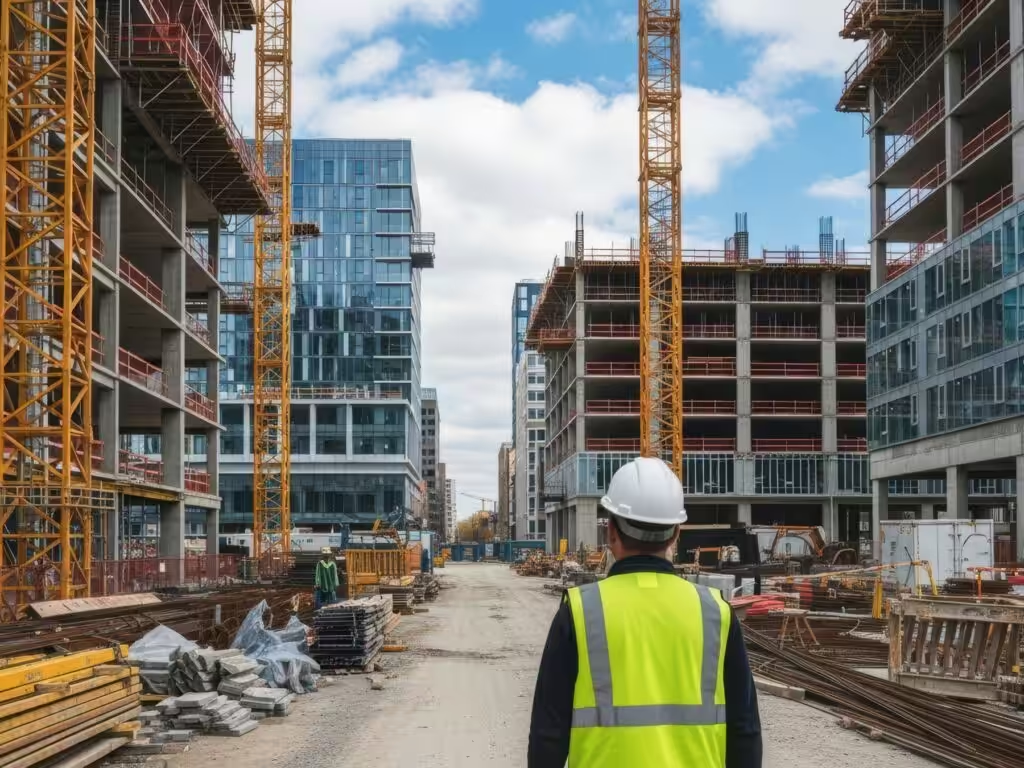
Why commercial through Evolve
Commercial is where we do our best work
Feasibility, credit-ready
We test the feasibility, costings and exit the way a credit team will, so the first answer you get is a real one.
Deep lender relationships
Banks, non-banks and private funders each want different equity, presales and experience. Deep working relationships with 15 to 20 lenders tell us who fits.
Structured around the exit
Selling off the plan, selling on completion or holding for rent changes who will fund it. We structure around your exit from day one.
Any size, same process
From a first townhouse site to a major project, with facilities from $2 million to $200 million, the process is the same: straight answers, the right funder, done properly.
“It is refreshing to deal with a expert who really knows his stuff. At no time do you feel Mark and his team are not focused on delivering the very best for your situation. Thank you Mark and the team at Evolve Lending & Finance.”
Daniel, Google review
“Les and Mark were wonderful throughout the entire process, providing expert advice to secure the exact deal I needed for my financial goals. Communication was excellent, and they kept me informed every step of the way.”
Jeff, Google review


In plain terms
Development finance, from site to completion
Development finance funds a site and the build on it, and it is lent against the project as much as the borrower. That is why strong developers still get stuck: a bank that takes months to say no, a feasibility built on hopeful sales, or a structure the credit team cannot follow. Each costs time, and on a development, time is interest.
We start where the funder will: feasibility, costings, approvals, presales, builder and exit, tested before anything is lodged. Then we match the project to bank, non-bank or private funders with appetite for it, and plan the exit from the start, whether that is sales or refinancing a finished commercial building with commercial property loans. Building one home to live in is different: construction loans are the simpler fit.
Tell us about the site, the numbers and where the project is up to. The answer will be straight: possible now, possible with changes, or not yet.
How it works
From first call to final draw
- Step
The first conversation
A call, usually within one business day, covering the site, approvals, costs, equity and how you plan to exit the project.
- Step
Feasibility and funder fit
Feasibility, costings, approvals and exit checked against funder policy, then matched to the bank, non-bank or private funders that fit.
- Step
The recommendation
Funder, structure, costs and conditions in writing, including our fee for service. You decide before anything goes to credit.
- Step
Approval to final draw
We coordinate the valuation, quantity surveyor and formal approval, then stay involved through each progress draw to completion.
Understanding development funding
How development lending actually works
How do property development loans work?
A development loan pays for the site and the build, with construction money released in stages as the work is done. Interest is usually capitalised, meaning it is added to the balance, and the loan is repaid from sales or refinanced on completion.
Before each draw the funder has the work inspected, by a quantity surveyor on most larger projects, to confirm progress and the cost to complete. The loan is sized against both total cost and finished value, so equity and contingency matter from the outset.
What do funders look for in a feasibility?
They look for a margin that survives scrutiny: the full cost of the project set against what it will realistically sell or value for. Funders test every line, and most want the build costs checked independently, usually by a quantity surveyor.
Expect questions on the land value, the building contract, fees, finance and selling costs, GST and contingency. End values that lean on best-case sales are where credit teams push back first.
Do you need presales to fund a development?
Not always. Banks usually want a level of presales before funding a larger residential project, while non-bank and private funders will often lend with fewer or none, at a higher cost.
Presales lower the cost of funding but take time to secure, and can lock in prices below what the finished product would fetch. Holding the project, or selling on completion, needs a funder comfortable with that exit and usually more equity.
Can a first-time developer get funding for a duplex?
Often, yes, particularly for smaller projects such as a duplex or a few townhouses. Some funders will back a first project where the builder is experienced, the feasibility is sound and there is enough equity, often in land already owned.
Funders weigh the whole team, so an experienced builder, architect or project manager can offset a thin track record. Smaller projects are often assessed more like a construction loan, with more weight on your own income.
Keep exploring
Buy, refinance or hold commercial premises.
Raise funds against property you already own.

Residual stock and short-term funding when the bank will not.

Guide · What lenders look at when a company borrows

Find out if the project stacks up
Call 1300 112 355
Questions developers ask before they commit
What can development funding be used for?
Development funding may be used for land acquisition, construction costs, project refinance, and a range of residential, mixed-use, or commercial development scenarios depending on the site, borrower, and lender.
What do lenders usually look at for development funding?
Lenders will usually look at the project type, site, total development costs, equity contribution, approval status, borrower experience, feasibility, end values, exit strategy, and overall lender fit.
Do I need prior development experience?
Not always, but experience can matter. Some lenders are more comfortable with experienced developers, while others may consider first-time or lower-complexity projects where the broader scenario is strong.
Can development funding be used for smaller projects?
Yes. Development funding can apply to smaller projects such as duplexes, townhouses, and other lower-scale developments, not just larger commercial or multi-stage projects.
What documents are usually needed for development funding?
Requirements vary by lender and scenario, but commonly include project details, plans, approvals or approval status, feasibility information, quantity surveyor or build cost details where relevant, financial information, and supporting information about the exit strategy.
How long does development funding approval usually take?
Timeframes can vary significantly depending on the lender, the complexity of the project, and how complete the application is when submitted. Better-prepared deals with the right lender fit usually move more efficiently.
What can make development funding harder to get approved?
Common issues include weak feasibility, insufficient equity, limited experience, poor site or project fit, approval issues, an unclear exit strategy, or sending the deal to a lender that does not suit that type of project.