

SMSF Lending: A Guide for Property Borrowing Through Super
SMSF lending allows a Self-Managed Super Fund to borrow money to buy property in certain circumstances. This is a form of SMSF borrowing to buy property and, when structured correctly, is typically done under a limited recourse borrowing arrangement (LRBA) with lenders that offer SMSF property loans. It can be used for commercial property, business premises through the fund or refinancing an existing SMSF loan. Existing residential SMSF loans may also be refinanced where permitted under current legislation.
These loans are not standard property loans. They are specialist SMSF loans involving super fund rules, legal structures, lender policy, trustee documents and ongoing compliance obligations. Meeting SMSF loan requirements from both regulators and lenders is critical.
The right advice matters because small setup mistakes can create large problems later.
What Is SMSF Lending?
SMSF lending is borrowing undertaken by a Self-Managed Super Fund to acquire an eligible asset, usually property, through a specific structure. Sometimes this is described as an SMSF property loan when the asset is real estate.
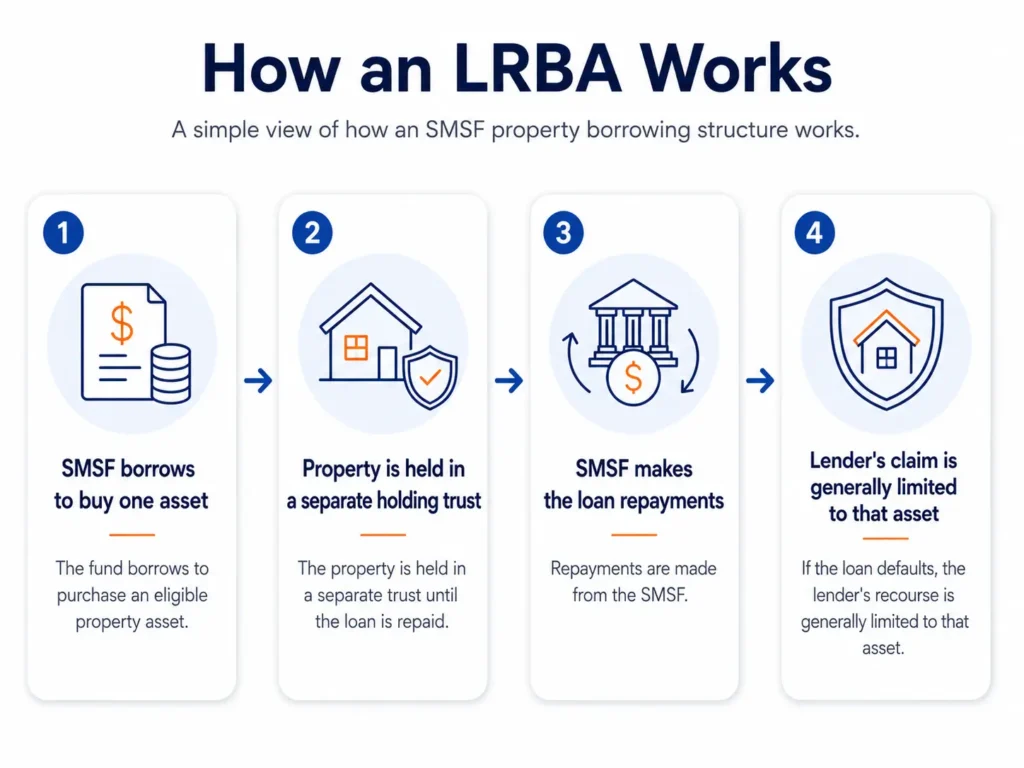
Most SMSF property loans are set up under a Limited Recourse Borrowing Arrangement, known as an LRBA (often called LRBA loans).
Under an LRBA, the lender’s claim is generally limited to the asset being purchased if the loan defaults. This is designed to protect the SMSF’s other assets.
What SMSF Loans Can Be Used For
SMSF lending may be used for:
- commercial investment property (via commercial SMSF loans)
- business premises leased to a related business where permitted
- refinancing an existing SMSF loan, including eligible existing residential SMSF loans
- reviewing SMSF loan structure or lender fit
The property must support the fund’s retirement purpose. Personal use by members or related parties is generally not allowed. This is a core SMSF loan requirement.
How LRBAs Work
Under an LRBA, the SMSF borrows to buy a single asset. The property is usually held in a separate holding trust until the loan is repaid.
The SMSF makes repayments, and once the loan is cleared the property can generally be transferred to the SMSF.
The structure must be set up correctly. The SMSF deed, holding trust, loan documents, contract and investment strategy all need to align.
Residential vs Commercial SMSF Loans
Recent legislative changes mean new SMSF borrowing to purchase residential property is no longer permitted under an LRBA.
Existing residential SMSF loans established before the legislative changes may generally continue and, in many cases, can still be refinanced, subject to lender policy and the applicable grandfathering provisions.
Commercial SMSF loans remain available for eligible commercial property such as offices, warehouses, shops and industrial units. In some cases, commercial property may be leased to a related business on market terms where it qualifies as business real property.
Commercial SMSF lending can appeal to business owners, but it also requires careful documentation and compliance.
What Lenders Assess
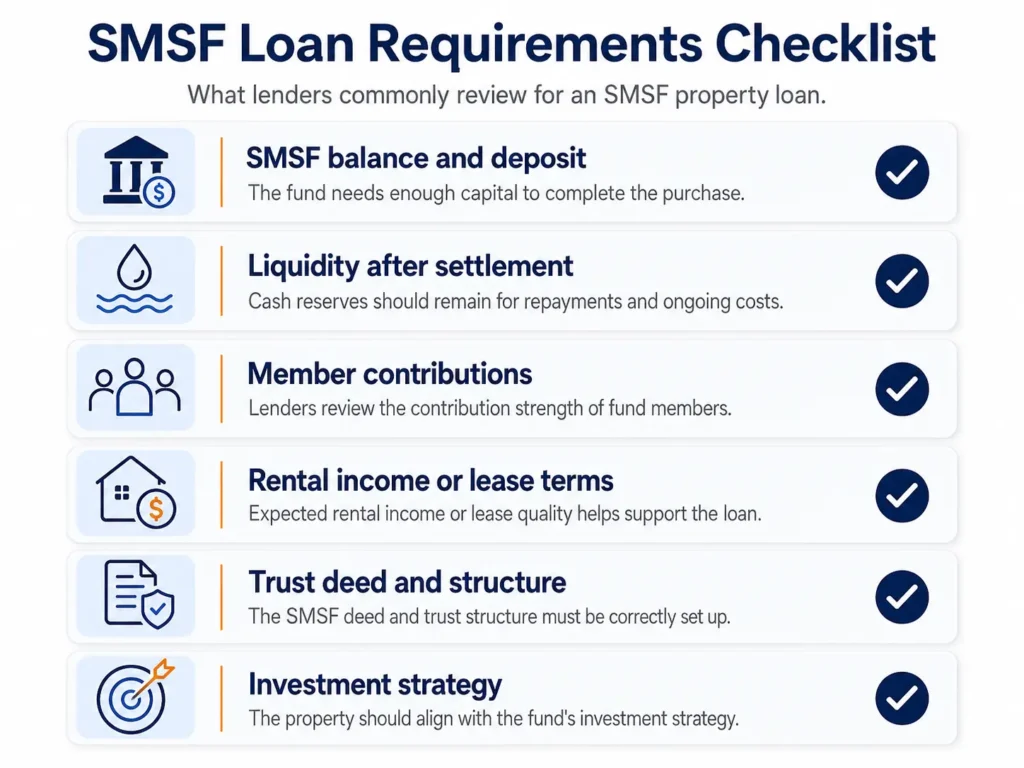
Lenders usually assess:
- SMSF balance
- deposit and liquidity
- member contributions
- rental income
- investment strategy
- trust deed
- trustee structure
- property type
- lease terms
- existing fund assets
- member ages and retirement plans
- loan purpose
They want to see that the SMSF can complete the purchase, meet repayments and retain enough liquidity after settlement. These factors commonly form key SMSF loan requirements.
Deposit and Liquidity
SMSF loans usually require a larger deposit than standard home loans. The exact amount depends on the lender, property type, lease strength, fund position and overall risk profile.
Liquidity is also important. The fund should not be left with no cash after settlement. It needs money for repayments, expenses, vacancies, repairs, accounting, audit and compliance costs.
Benefits of SMSF Lending
SMSF lending may allow a fund to acquire eligible commercial property it could not buy using cash alone. It may provide rental income, long-term growth potential and broader investment choice.
For business owners, buying commercial premises through an SMSF may provide a way for the fund to hold a business real property asset while the business pays rent on commercial terms.
Potential benefits include:
- commercial property exposure inside the SMSF
- rental income
- possible long-term capital growth
- broader investment mix
- ability to purchase business premises where rules allow
Risks and Compliance
SMSF lending carries significant risks. Property values can fall, interest rates can rise, tenants can leave and liquidity can tighten.
There are also strict compliance obligations. The arrangement must satisfy SMSF rules, the sole purpose test and LRBA requirements under a limited recourse borrowing arrangement.
If the structure is wrong, the consequences can be serious.
Trustees should obtain legal, tax and SMSF advice before committing.
Refinancing an SMSF Loan
Existing SMSF loans may be refinanced to improve pricing, structure or lender fit. However, the new lender will still review the fund, property, documents, liquidity and serviceability. This includes many existing residential SMSF loans established before the legislative changes, provided they remain eligible under the relevant grandfathering provisions and lender policy.
Refinancing can also be more limited than standard home loan refinancing because fewer lenders operate in the SMSF space.
How to Prepare
Before applying, review the SMSF deed, investment strategy, fund balance, member contributions, liquidity, property details, lease, trust structure and professional advice.
A well-prepared SMSF application should clearly show that the loan, property and fund strategy work together.
Conclusion
SMSF lending can be powerful, but it is not simple. It sits at the intersection of property lending, super rules, tax, legal structure and long-term retirement planning. At Evolve Lending & Finance, we help clients assess SMSF lending options, compare lender requirements and structure applications for commercial property lending and eligible SMSF loan refinances with clearer advice and stronger lender fit.
