Business Vehicle Finance
Business vehicle finance helps businesses access the vehicles they need without tying up large amounts of capital upfront.
It can be used by sole traders, ABN holders, companies, partnerships and established businesses to fund vehicles used for work, trade, transport, sales, service delivery or broader business operations.
But the right facility is not just about getting approved. It is about choosing the right structure, the right lender and the right repayment setup for the vehicle, the business and the way it will actually be used.
At Evolve Lending & Finance, we help business owners assess vehicle finance options properly from the outset. Whether the need is for a ute, van, work vehicle, passenger vehicle, commercial vehicle or a broader fleet requirement, we help borrowers move forward with clearer advice, better lender fit and a more considered funding decision.
What business vehicle finance can be used for
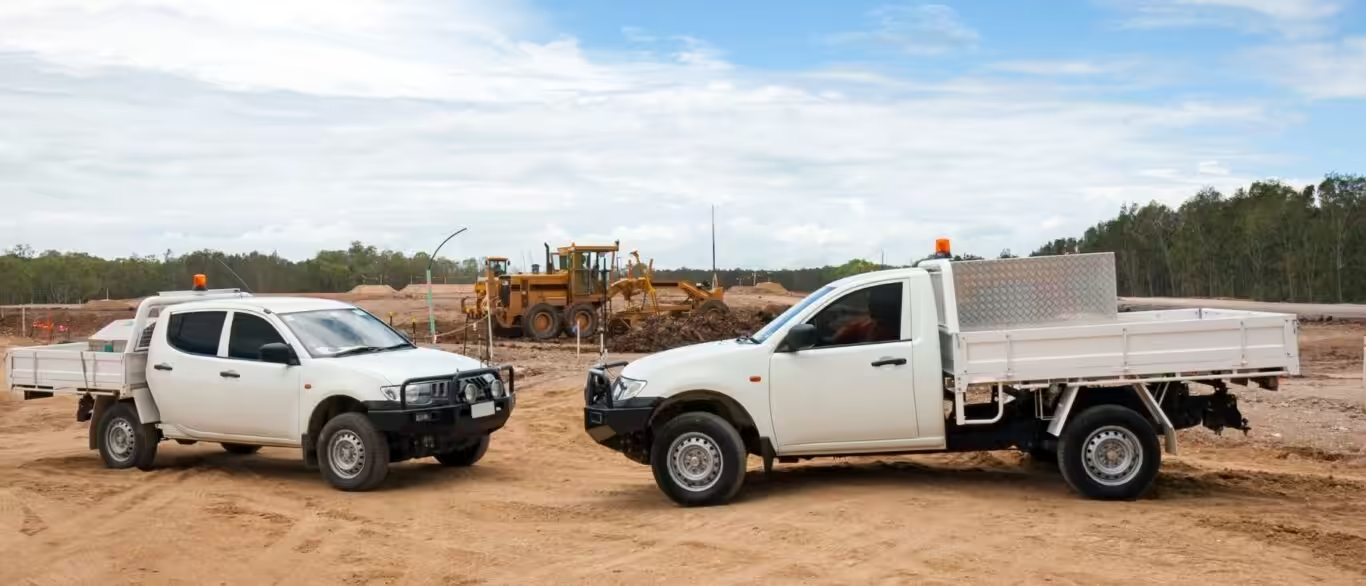
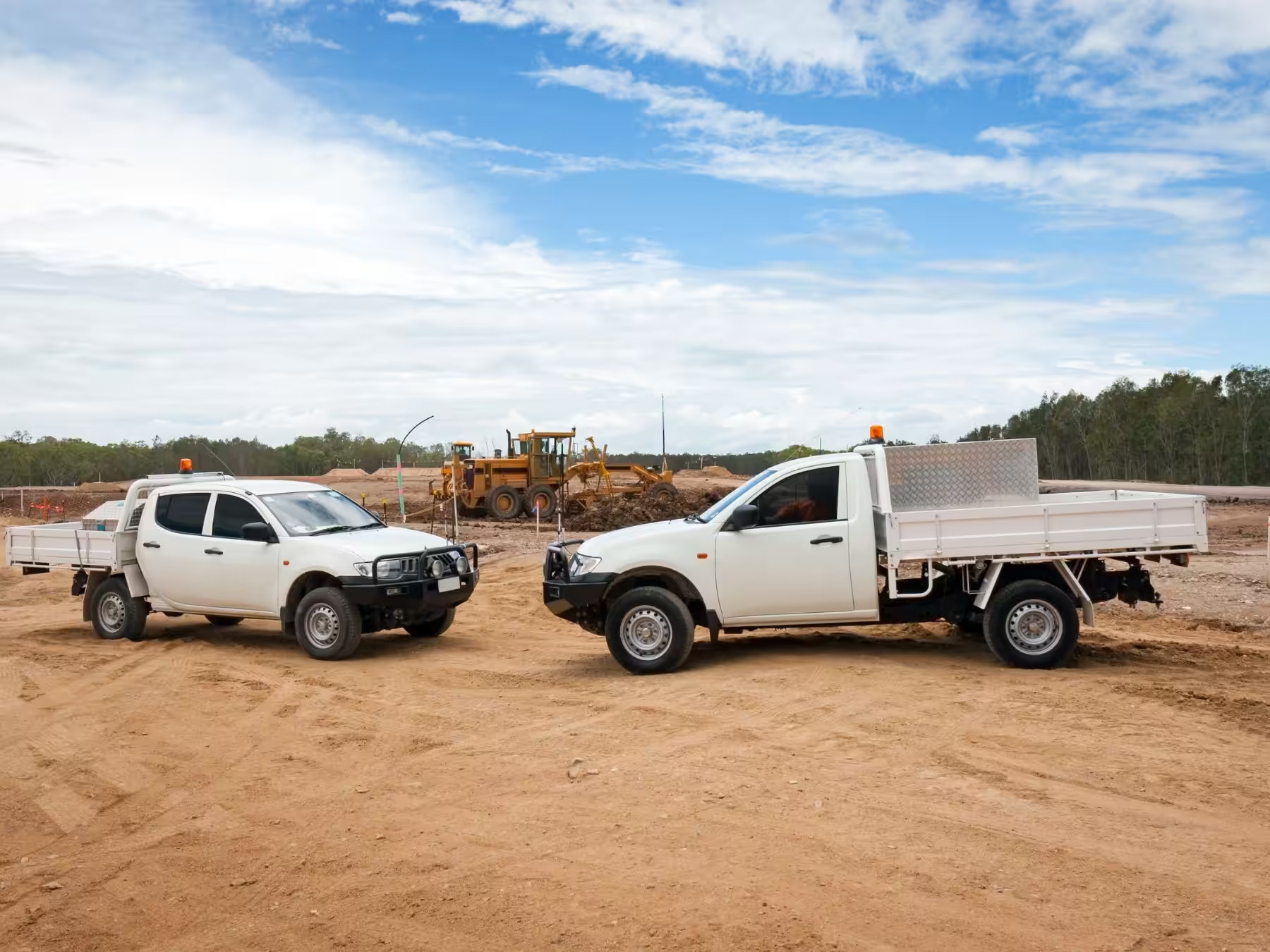
Business vehicle finance can apply across a wide range of vehicles used in business.
That can include:
- utes and vans
- passenger vehicles used for business purposes
- SUVs and 4WDs
- light commercial vehicles
- fleet vehicles
- trade and service vehicles
- delivery vehicles
- transport and logistics vehicles
- other work vehicles used in day-to-day operations
The right option depends on the vehicle, business use, borrower profile, tax position and preferred ownership structure.
Why structure matters
Business vehicle finance is not a single product.
Depending on the scenario, the most suitable option may be a finance lease, operating lease, commercial hire purchase or chattel mortgage. The differences matter because they can affect ownership, maintenance responsibility, tax treatment, repayment structure and how the vehicle sits within the business.
That is why the right decision is not just about rate. It is about choosing a finance structure that fits the vehicle, the business and the intended use.
This is especially important for business owners who want to preserve cash flow, manage tax timing, replace vehicles regularly or fund multiple vehicles over time.
Business vehicle finance rates, loan terms and repayment options
Business vehicle finance interest rates, loan terms and monthly repayments can vary depending on the lender, vehicle type, loan amount, business profile, credit history, deposit position and repayment structure.
Some business vehicle loans may include a balloon payment at the end of the loan term, which can reduce monthly repayments but leave a lump sum payable later. Fees, charges, eligibility criteria and terms and conditions can also differ between lenders.
The right finance solution should consider how the vehicle will be used, the business cash flow, tax position, ownership preference and longer-term funding strategy – not just the advertised interest rate.
Common business vehicle loan and finance structures
Finance lease
A finance lease allows the lender to retain ownership of the vehicle during the lease term while the business pays for use of the vehicle over an agreed period. At the end of the term, ownership may transfer depending on the structure.
Operating lease
An operating lease is generally better suited where ownership at the end is not the priority and flexibility matters more. This can be relevant where upgrade cycles, vehicle replacement, maintenance or obsolescence are important.
Commercial hire purchase
Commercial hire purchase can suit businesses that want to spread repayments over time and take ownership after the final instalment is made.
Chattel mortgage
A chattel mortgage is often used where the business wants to own the vehicle from the start, with the lender taking security over the asset until the loan is repaid.
This structure is commonly used for business car finance, ute finance, van finance and other commercial vehicle finance scenarios.
Why businesses use vehicle finance
For many businesses, the main advantage is not having to outlay the full purchase price upfront.
That can help preserve working capital, support growth, reduce pressure on cash reserves and allow funds to be used elsewhere in the business. Depending on the structure, there may also be accounting or tax considerations that influence which product is the better fit.
Business vehicle finance may be useful when a vehicle is needed to:
- replace an existing work vehicle
- support a growing team
- service more customers
- improve delivery or transport capacity
- upgrade to a more reliable or suitable vehicle
- manage cash flow while acquiring an income-producing asset
The key is making sure the finance structure supports the business, not just the purchase.
What lenders usually look at
Lenders will usually consider:
- the type and age of the vehicle
- how the vehicle will be used
- whether the borrower is a sole trader, company, trust or partnership
- ABN and GST registration status
- the strength and trading history of the business
- financial position and existing liabilities
- the supplier invoice or vehicle details
- the requested term and repayment structure
- whether the scenario fits their credit policy
- whether the application is full doc, low doc or asset-backed
Lenders may also assess whether the vehicle is suitable for business purposes, whether a fee applies to the facility, and whether the requested loan term, repayment structure and balloon payment are appropriate for the borrower and asset.
Some business vehicle finance applications can be relatively streamlined. Others require more detailed assessment depending on the borrower, the vehicle, the business structure and the lender.
Low doc and ABN vehicle finance
Some business owners and ABN holders may not have full financial documents available at the time they need a vehicle.
Depending on the lender and scenario, low doc vehicle finance may be assessed using alternative evidence such as ABN history, GST registration, business bank statements, accountant information, asset position or declared income.
This can be useful for some sole traders, contractors and small business owners, but it does not mean every application will qualify. Lender appetite, vehicle type, deposit position, business history and credit profile still matter.
The goal is to match the application to a lender that genuinely fits the scenario, rather than forcing it through the wrong policy.
How Evolve helps
At Evolve Lending & Finance, we help business owners assess vehicle finance options more clearly from the start.
That includes:
- comparing suitable finance structures for the vehicle and business
- helping identify lenders that better fit the scenario
- assessing full doc, low doc and ABN vehicle finance options where relevant
- explaining the trade-offs between different finance products
- helping prepare the application and supporting documents
- guiding the process through approval and settlement
The goal is not just to secure finance. It is to secure the right business vehicle finance structure for the business and the job the vehicle needs to do.
Speak with Evolve
If your business is considering vehicle finance, it makes sense to assess the structure properly before committing to a lender.
Business vehicle finance can also sit alongside broader funding needs, including business loans, equipment finance, commercial property lending, rural and agricultural lending, and local finance guidance in Penrith or Parramatta. The right structure should consider the vehicle, business use, repayment setup, tax position, cash flow and longer-term funding strategy.
Speak with Evolve Lending & Finance for clearer advice, better lender fit and a more considered business vehicle finance strategy.