
Helping a Trade Business Finance a Work Ute Without Draining Cash Flow
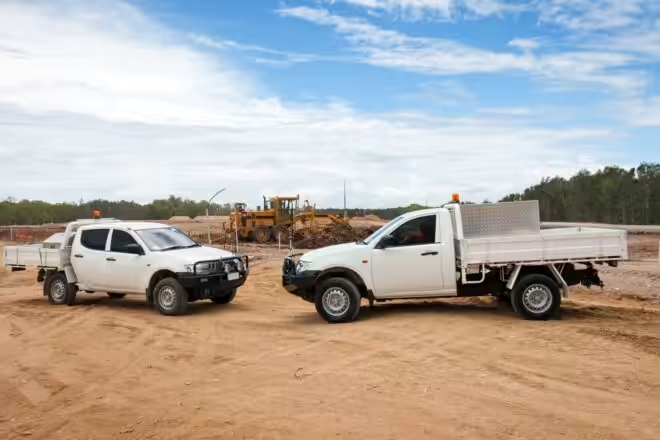
Work Ute Finance for Trade Businesses Without Draining Cash
Summary
This client outcome shows how an ABN car loan helped a growing trade business purchase a work ute without using up cash reserves needed for day-to-day operations. In short, it was work ute finance structured to protect day-to-day cash flow.
Luke operated a small building and maintenance business in Western Sydney. His existing ute was becoming unreliable, and he needed a replacement vehicle to carry tools, materials and equipment between job sites. The vehicle was essential to the business, but buying it outright would have reduced the cash buffer he needed for materials, wages, insurance, tax and supplier payments.
The challenge was not simply finding a lender that would approve the vehicle purchase. The real issue was choosing a finance structure that suited the business’s cash flow, ABN history, business-use position and tax considerations.
By reviewing the business bank statements, ABN trading history, vehicle use, repayment comfort, deposit position and lender options, we helped structure an ABN car loan that allowed the business to obtain the vehicle while preserving working capital.
Client Background
Luke had been operating as a sole trader for several years before transitioning into a more structured trade business. He specialised in small building works, maintenance, fit-outs and repair jobs for residential and commercial clients.
His business had grown steadily through referrals and repeat work. He was not trying to build a large construction company, but he had reached the point where a reliable vehicle was critical to keeping jobs moving.
His existing ute had high kilometres, required regular repairs and was starting to affect his schedule. Breakdowns were becoming more frequent, and he was beginning to lose productive time moving tools and materials between jobs.
Luke had found a suitable dual-cab ute priced at approximately $72,000, including accessories needed for work use. The vehicle would be used primarily for business purposes, including carrying tools, visiting job sites and transporting materials.
He had enough cash to contribute a deposit, but he did not want to pay for the vehicle outright.
That was sensible.
For a trade business, preserving cash can be just as important as securing the asset.
The Funding Goal
Luke wanted to finance the work ute through an ABN car loan—a common car loan for ABN holders.
His key objectives were to:
- purchase a reliable work vehicle
- avoid using all available business cash
- keep monthly repayments manageable
- structure the loan around business use
- understand whether a balloon payment made sense
- work with a lender that accepted his business profile
- keep the process fast enough to secure the vehicle
- coordinate the finance structure with his accountant’s advice
The goal was not just to get the ute approved. It was to fund the vehicle in a way that supported the business rather than weakening it.
Why an ABN Car Loan Was Considered
An ABN car loan was considered because the vehicle was primarily for business use. It’s a form of business vehicle finance often referred to as an ABN holder car loan or ABN car loans.
Business vehicle finance can be structured differently from a standard personal car loan. Depending on the borrower, vehicle, lender and tax advice, the finance may be arranged as a chattel mortgage or another commercial vehicle finance structure.
For many business owners, a chattel mortgage is a common option because the business generally takes ownership of the vehicle from the start, while the lender takes security over the vehicle.
However, the right structure depends on the business, accounting treatment, GST position, vehicle use and cash flow.
Luke was registered for GST, had an active ABN, and intended to use the vehicle substantially for business. That made an ABN vehicle finance pathway worth assessing.
The Key Challenges
Several issues needed to be addressed before recommending a structure.
1. Preserving working capital
Luke had cash available, but using too much of it as a deposit would have left the business exposed.
He still needed funds for materials, labour, fuel, insurance, tax, equipment maintenance and slower-paying clients.
A vehicle may be essential, but it should not leave the business short of cash.
2. Choosing the right repayment structure
Luke wanted repayments that were manageable without stretching the business.
A lower monthly repayment was attractive, but it needed to be balanced against the end-of-term position.
This raised the question of whether a balloon payment should be included.
3. Lender assessment of business income
Luke’s income was not PAYG salary. The lender needed to assess his business bank statements, trading history, ABN age, BAS and overall capacity to service the loan.
That meant lender fit mattered.
4. Tax treatment needed accountant input
Business vehicle finance can involve GST, depreciation, interest deductibility, logbook requirements and possible FBT implications depending on the structure and usage.
We made it clear that Luke needed to confirm the tax treatment with his accountant before proceeding.
Our Approach
We started by reviewing the purpose of the vehicle and how it supported the business.
This included looking at:
- ABN and GST registration
- business trading history
- business bank statements
- BAS position
- current vehicle issues
- proposed vehicle cost
- expected business use
- available deposit
- repayment comfort
- existing debts
- credit conduct
- accountant involvement
The purpose was to ensure the loan was not being assessed as a lifestyle purchase. It was a business asset that directly supported income generation.
We also discussed the difference between getting the vehicle approved and structuring the loan well.
That distinction mattered because a poorly structured vehicle loan can create cash flow pressure even where the asset is useful.
Documents and Evidence Used
The application was supported by:
- business bank statements
- ABN details
- GST registration details
- recent BAS
- vehicle tax invoice
- identification
- details of existing debts
- deposit evidence
- summary of business use
Because Luke had a solid trading history and clean repayment conduct, the application was stronger than he expected.
The business bank statements showed consistent deposits and manageable expenses, which helped support the repayment assessment.
Recommended Strategy
We recommended an ABN vehicle finance structure with a modest deposit and a balloon payment that kept monthly repayments manageable without creating an unrealistic final obligation – effectively a balloon payment car loan structure.
The structure was designed to:
- fund the vehicle without draining cash reserves
- keep repayments aligned with business cash flow
- use the vehicle as security
- avoid unnecessary complexity
- allow Luke to retain funds for operating costs
- leave a clear end-of-term plan
The balloon payment was not treated as an afterthought.
We discussed the likely options at the end of the term:
- pay the balloon from business cash
- refinance the balloon
- trade the vehicle and use proceeds toward the payout
- upgrade if the business requirement changed
The key was that Luke understood the end position before signing.
Why Lender Fit Mattered
ABN car loan lenders do not all assess business borrowers the same way.
Some lenders focus heavily on time in business. Others place more weight on bank statement turnover, BAS, credit history or the vehicle itself.
Some are more comfortable with sole traders. Others prefer companies with full financials.
Luke needed a lender that was comfortable with:
- sole trader structure
- trade business income
- business bank statement assessment
- work vehicle use
- ABN and GST history
- balloon payment structure
- reasonable turnaround time
The right lender allowed the loan to be assessed on the business’s real trading position rather than forcing Luke into a standard consumer car loan pathway.
Outcome
Luke secured finance for the new work ute and was able to take delivery without draining the business’s cash reserves.
The loan was structured with repayments that fit his current cash flow and a balloon that he understood and planned for.
The business retained enough working capital to continue paying suppliers, managing materials, covering wages and handling normal operating costs.
Most importantly, the vehicle solved a real business problem. It reduced downtime, improved reliability and gave Luke the capacity to service jobs more efficiently.
The outcome was not just vehicle approval. It was a finance structure that allowed the business to keep operating confidently.
What Made the Application Work
Several factors strengthened the application:
- active ABN and GST registration
- established trade business
- clear business-use purpose
- suitable vehicle type
- consistent business bank statement turnover
- clean repayment conduct
- modest deposit
- realistic balloon structure
- lender selected for ABN vehicle finance policy fit
- accountant involvement on tax considerations
The application worked because the vehicle purpose, cash flow and lender structure aligned.
Common Misconception
A common misconception is that having an ABN automatically makes vehicle finance easy.
It does not.
An ABN may open the door to commercial vehicle finance, but lenders still assess the business, income, bank statements, credit conduct, vehicle use, deposit and repayment capacity.
Another misconception is that the lowest monthly repayment is always best.
A lower repayment may help cash flow, but if it relies on a large balloon payment that has not been planned for, it can create pressure later.
Key Takeaways
- ABN car loans should be structured around business use and cash flow.
- Buying a vehicle outright can weaken working capital unnecessarily.
- A balloon payment can reduce monthly repayments, but it needs a clear end-of-term plan.
- Lender policy varies for sole traders, companies and newer businesses.
- Bank statements and BAS can be important for business vehicle finance.
- Tax treatment should be confirmed with an accountant before purchase.
- The right vehicle finance structure should help the business operate, not strain it.
Next Steps
If you need a ute, van, car or commercial vehicle for your business, it is worth reviewing the finance structure before signing the dealership paperwork.
The right option depends on your ABN history, business use, GST position, cash flow, deposit, vehicle type and lender fit.
Speak with Evolve Lending & Finance for clearer ABN car loan advice and a more considered path forward.
Privacy Note
To protect privacy, names and identifying details have been changed. This client outcome is a composite based on common borrower scenarios and lending issues we regularly help clients work through. The outcome shown is intended to explain the type of strategy, structure and lender-fit considerations that may apply in similar situations.
Important Note
Business vehicle finance can involve tax, GST, depreciation, logbook and Fringe Benefits Tax considerations. Business owners should seek advice from their accountant or tax adviser before committing to a vehicle purchase or finance structure.
How We Help
Whether you are buying a work ute, van, truck, equipment or other business asset, we help you compare lender options, understand repayment structures and arrange finance that supports your business cash flow.
Q&A
What is an ABN car loan?
An ABN car loan is vehicle finance for borrowers who hold an Australian Business Number and intend to use the vehicle primarily for business purposes. It is also called a car loan for ABN holders; some lenders advertise these as car loans for ABN holders. Lenders may assess business income, ABN history, bank statements, BAS, credit profile and vehicle use when considering the application.
Can a sole trader get an ABN car loan?
Yes, sole traders may be eligible for ABN car loans if they can show suitable business use, income, trading history and repayment capacity. The lender requirements will depend on the borrower, vehicle, deposit, ABN age and supporting documents.
What is a balloon payment on a business car loan?
A balloon payment is a lump sum left to be paid at the end of the loan term. It can reduce monthly repayments, but it must be planned for. At the end of the term, the borrower may pay the balloon, refinance it, trade the vehicle or upgrade, depending on the situation.
Is a chattel mortgage the best option for ABN vehicle finance?
A chattel mortgage is a common business vehicle finance structure, but it is not automatically best for every borrower. The right structure depends on business use, ownership goals, GST registration, tax advice, cash flow and lender policy.
Should I speak to my accountant before financing a business vehicle?
Yes. Business vehicle finance can have tax and GST implications, including depreciation, interest deductibility, input tax credits, business-use percentage, logbook records and possible FBT. Your accountant should confirm the tax treatment before you commit.


Get Clear Lending Insights
More Real Client Outcomes


Move forward with clearer lending advice
Whether you are buying a home, refinancing, investing in property or funding a business, we help you understand your options, assess lender fit and structure the lending properly before you commit to a path forward.