

Understanding the Unsecured Business Loan: A Guide
Your local graphic design firm just landed a massive client, but you desperately need $15,000 for new workstations to complete the job. Traditional banks usually demand a “security deposit” – like your personal vehicle – to approve small business loans. You want to seize this growth opportunity, but risking your family’s hard-earned assets feels entirely too dangerous.
While it does help, you don’t actually need to own physical property to borrow money. This is exactly where an unsecured business loan comes in. Think of this financial tool like a standard credit card rather than a traditional mortgage. Instead of an asset-backed agreement where lenders evaluate your physical equipment, this cash flow-backed approach looks purely at your daily revenue and overall cash flow.
Why do so many business owners rely on collateral-free business financing or explore it for startup funding? Skipping the lengthy property valuation process creates a massive speed advantage, putting cash into your account in days rather than months. Navigating these flexible options allows you to protect your personal assets while keeping your business moving forward.
Secured Debt vs. Unsecured Financing: Protecting Your Personal Safety Net
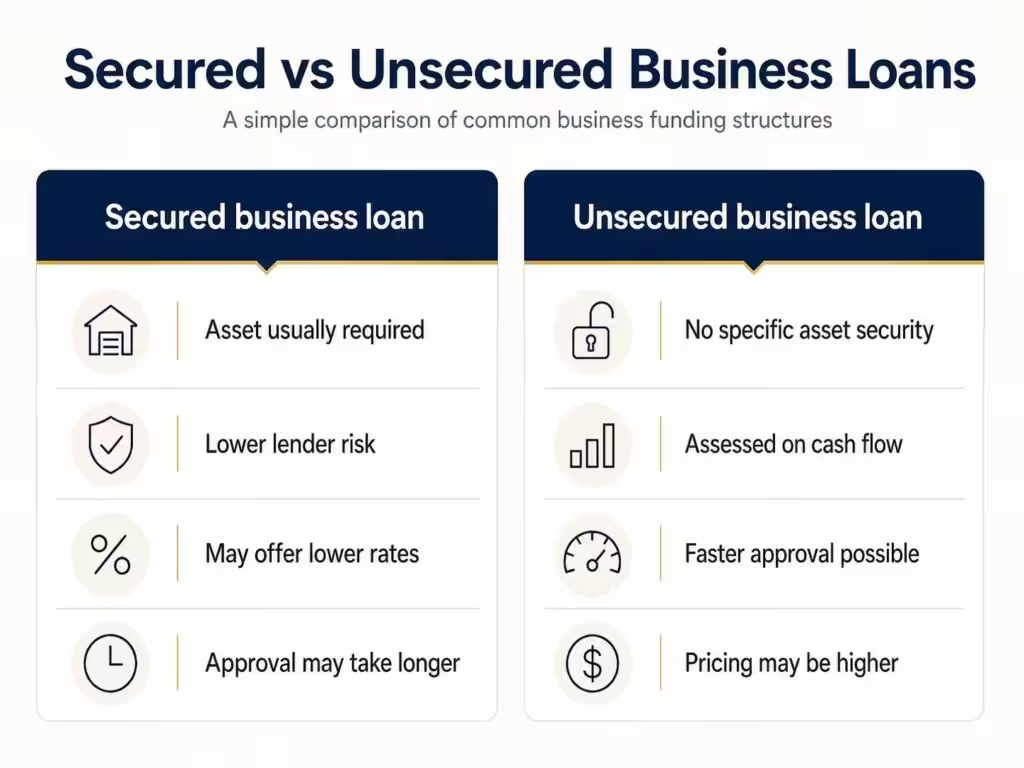
Imagine you need cash fast to buy extra inventory for a holiday rush. Traditional banks usually ask for an “asset-backed security,” which is just finance-speak for putting up collateral like your house or other assets. This secured debt offers lower interest rates, but if sales slump, the bank can take your property. That is exactly why many business owners choose no-asset financing, such as an unsecured business loan, instead.
Trading a lower interest rate for personal peace of mind is the main difference when comparing secured debt vs no-asset business financing. Because lenders aren’t waiting weeks for property valuations, platforms offering online business loans can often fund your account in days. Here is how the trade-offs usually look:
- Approval time: Weeks (Secured) vs. Days (Unsecured)
- Interest rate: Lower (Secured) vs. Higher (Unsecured)
- Risk to home/equipment: High (Secured) vs. None (Unsecured)
- Flexibility of use: Tied to specific assets (Secured) vs. Unrestricted (Unsecured)
Paying a slightly higher rate for quick business loans makes sense when speed equals profit, like covering an emergency repair or grabbing a bulk inventory discount. You protect your personal safety net while still getting the cash required to operate. Since you aren’t providing a physical safety net for the bank, lenders rely on alternative metrics to determine if you are a safe bet.
Qualifying Without Collateral: The Three Numbers Lenders Watch Closely
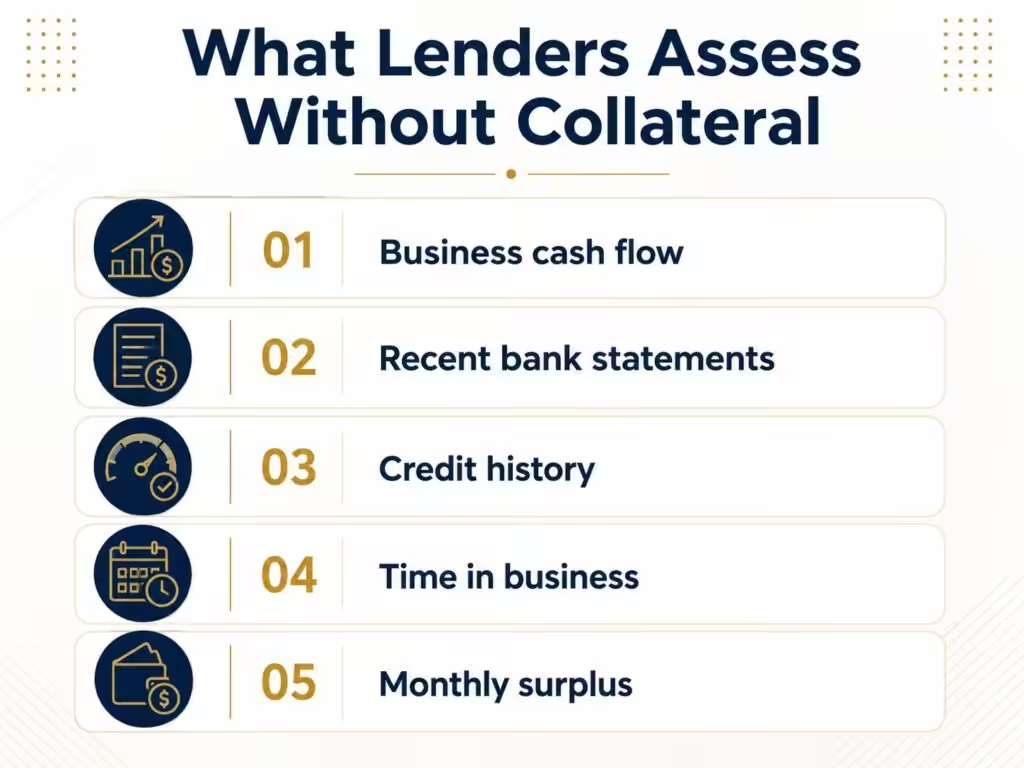
Figuring out how to qualify for no-collateral funding is simple once you understand “cash flow underwriting.” Without physical assets to secure the money, modern lenders judge your business by its financial heartbeat. They want to see money consistently moving through your accounts, proving you have the momentum to handle a new payment.
Your personal financial history still plays an important role. While traditional banks demand near-perfect credit, alternative platforms are much more flexible. The exact minimum credit score for business funding depends on the lender, but a 600 usually gets your foot in the door. Because they focus on daily operations, minor past personal credit hiccups won’t automatically disqualify you.
Consistent revenue is actually your strongest bargaining chip when seeking fast approval small business credit. Instead of sending property valuers, online underwriters simply ask for recent bank statements. They read these to understand your cash flow story, verifying that your monthly deposits easily cover your existing expenses. A healthy, predictable income stream gives them confidence you can manage the debt.
Beyond just making money, lenders need to see how long you have been operating. They typically require six to twelve months of active history to ensure your venture is stable. Hitting these three targets – a 600+ credit score, solid deposits, and a year in business – makes you a prime candidate. However, before signing anything, you must understand the alternative security measures lenders use to protect their capital.
The ‘Hidden’ Terms: Understanding Personal Guarantees and General Security Agreements
Even without putting your family home on the line, unsecured borrowing still involves a catch. The most common safety net lenders use is a personal guarantee. Think of this as the “co-signer promise” – you are personally stepping up to back your business. If your company cannot pay the bill, you are legally promising to cover it yourself. Meeting these personal guarantee requirements means that defaulting will have a direct impact on personal credit history and your private bank accounts.
Beyond your personal guarantee, lenders will also file a General Security Agreement (GSA) to protect their investment. This acts as a general claim on your business property rather than a claim on one specific item. Here is how that looks in practice:
- Specific Collateral: The lender holds the title to a specific asset (eg. a delivery truck); if you do not pay, they repossess that exact asset (ie. the truck).
- General Security Agreement vs specific asset collateral: The lender files a blanket claim on your general business assets – like equipment, inventory, or accounts receivable – to recover their funds.
Grasping these security measures explains how online platforms can offer fast approvals without sending property appraisers to your business. However, skipping the traditional collateral process inherently changes how the loan is priced.
The Price of Speed: Comparing APR and Factor Rates for Fast Funding
Getting cash quickly without putting up your physical assets comes at a premium. When exploring options, you will typically encounter fixed-rate term loans for businesses – where you receive a lump sum and pay a set percentage – or revolving lines of credit, which function like a business credit card. Because the lender takes on more danger, the annual percentage rate for high-risk business debt will naturally be higher than a traditional, secured mortgage.
Modern online platforms often ditch traditional interest percentages entirely in favour of a simpler calculation called a factor rate. If you explore alternative lending for companies with no collateral, you might see a factor rate of 1.2 on a $10,000 advance. Instead of an annual rate that moves over time, you just multiply the numbers: $10,000 times 1.2 equals a flat $12,000 total repayment, meaning you know exactly what you owe from day one.
Calculating this exact dollar amount is crucial for preventing sticker shock when reviewing your total cost of capital. While a factor rate translates to a high APR on paper, paying that premium makes sense if fast cash helps you secure a highly profitable contract. Knowing how to weigh that price tag against your potential profits is crucial before accepting any terms.
Strategic Funding: When to Use Quick Capital and When to Walk Away
Every dollar you borrow should make you more money than it costs. When evaluating quick business loans, the main focus is your opportunity cost – the profit you lose by not having cash right now. If an expensive, short-term loan lets you land a lucrative commercial contract, the new revenue easily justifies the borrowing price because the return on your investment is so high.
Matching the loan to your business’s revenue cycle keeps you out of trouble. Smart owners use fast approval loans for short-term, high-return moves, like repairing a broken bakery oven or buying discounted holiday inventory. Because these actions generate cash quickly, you can pay off the debt before fees erode your profits.
Conversely, using borrowed money just to pay basic rent or daily overhead creates dangerous bad debt. While finding working capital for startups without assets helps during temporary growth surges, applying it to long-term projects with slow payouts is risky. If the cash will not directly create quick revenue, walk away. Recognising these profitable opportunities ensures you borrow effectively without jeopardising long-term stability.
Your Next Steps: How to Secure Fast Approval and Manage Your Debt
You no longer have to choose between missing a growth opportunity and risking your personal property. While they carry slightly higher rates, tapping into unsecured business loan lenders gives you the speed and asset protection you need to scale. You now understand how to weigh these costs against the immediate value of your next big move.
Before approaching online lenders or platforms offering online business loans for a quick capital injection, set yourself up for immediate success with this 3-step Readiness Checklist:
- Gather 3 months of bank statements.
- Check your personal credit.
- Calculate your monthly surplus.
Start your search by comparing offers from at least three providers to lock in the lowest possible cost. Whether you need a quick lump sum or flexible business lines of credit without assets, comparing multiple options helps secure the most favourable terms. As your business health strengthens, you can eventually graduate to lower-rate secured financing. For now, you are fully equipped to safely fund your vision on your own terms.
