

Refinancing Your Mortgage: Mortgage Refinancing Guide
Refinancing your mortgage can help reduce repayments, improve loan structure, access equity or move to a lender that better suits your needs. But a refinance should do more than chase a lower headline rate.
The strongest refinance outcomes come from reviewing the full position: rate, repayments, loan features, lender fit, future plans, equity, cash flow and costs, including mortgage refinance costs.
This mortgage refinancing guide explains when to refinance a mortgage, what lenders assess and how to approach the decision clearly.
What Is Refinancing?
Refinancing means replacing your current home loan with a new loan. This may be with your existing lender or a different lender. You might refinance mortgage debt to secure features or pricing that better fit your goals.
People refinance for many reasons, including reducing repayments, accessing equity, consolidating debt, changing loan features, moving from fixed to variable, restructuring investment debt or finding a lender that better suits their circumstances.
Why People Refinance
A lower rate is one reason to refinance, but it is not the only reason.
A borrower may refinance because their fixed rate is ending, their repayments have increased, they want an offset account, they need better flexibility, they want to consolidate higher-interest debts, or they want to access equity for renovation, investment or business purposes.
A refinance may also help if the current lender no longer suits the borrower’s income type or future plans. When refinancing your mortgage, clarity about goals and time frames helps ensure the new structure is suitable.
When Refinancing May Make Sense
Refinancing may make sense if the benefit outweighs the costs and the new structure better supports the borrower’s goals.
Potential benefits include:
- lower repayments
- better loan features
- improved lender fit
- access to equity
- debt consolidation
- sharper pricing
- better fixed and variable structure
- improved cash flow
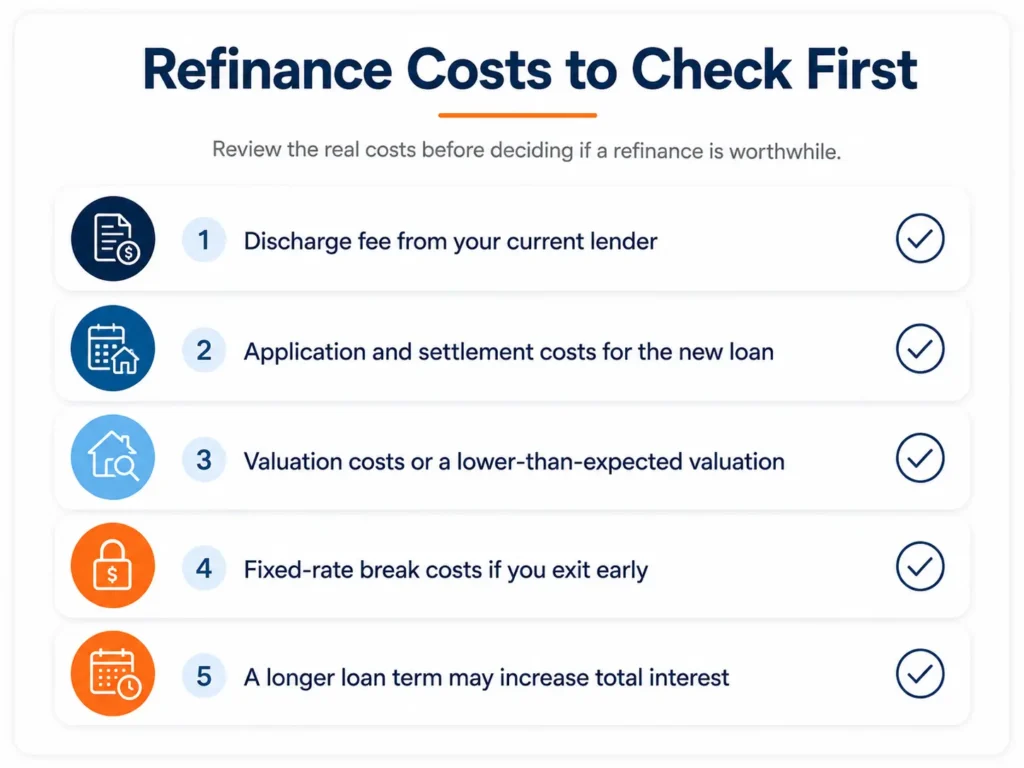
The key is to calculate the real benefit after considering fees, discharge costs, application costs, valuation issues and any fixed-rate break costs, as well as overall mortgage refinance costs.
When Refinancing May Not Be Worth It
Refinancing is not always the right move.
It may not be worthwhile if the savings are small, the costs are high, the new loan term resets debt for too long, the borrower loses important features, or the refinance increases risk.
Debt consolidation also needs care. Rolling short-term debts into a home loan may reduce monthly repayments, but it can cost more over time if the debt is repaid over a much longer term.
What Lenders Assess
When refinancing, lenders usually assess income, expenses, credit conduct, repayment history, property value, existing loan balance, purpose of the refinance and overall serviceability.
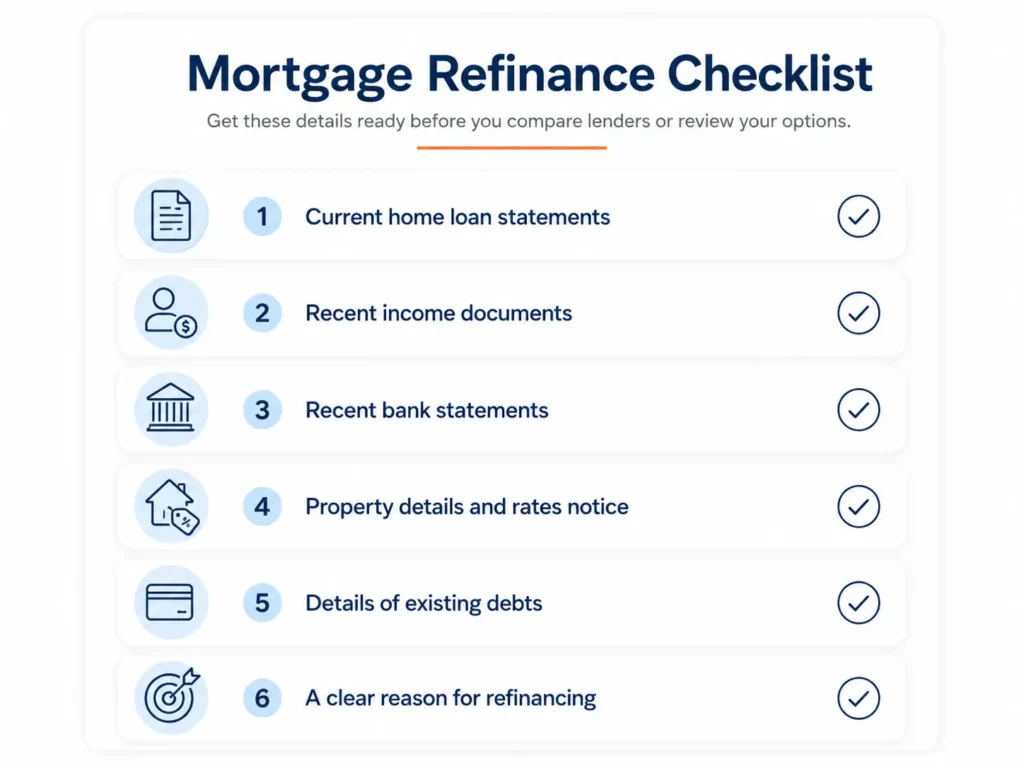
They may ask for payslips, tax returns, bank statements, loan statements, credit card statements, rates notices and details of any debts being consolidated.
For self-employed borrowers, lender selection is especially important because different lenders treat business income, add-backs, company profits, trust income and tax debt differently.
Accessing Equity: Equity is the difference between the property value and the debt secured against it. Refinancing can allow borrowers to access some of that equity for approved purposes.
Common purposes include renovations, investment property deposits, business funding, vehicle purchase, education costs or debt restructuring.
Lenders will want to understand the purpose of the equity release and whether the borrower can afford the increased debt.
Debt Consolidation
Debt consolidation can combine debts such as personal loans, credit cards, car loans or business debts into a home loan. Some borrowers choose to consolidate debt into mortgage splits with a defined payoff plan.
This can reduce monthly repayments, but it should be approached carefully. Lower repayments do not always mean lower total cost.
A good structure may include separate loan splits and a plan to repay consolidated debt faster rather than spreading it over the full home loan term.
Fixed, Variable and Split Loans
Refinancing is a chance to review whether fixed, variable or split loan structures are appropriate.
Fixed rates can provide certainty, while variable rates may offer more flexibility. A split loan can give borrowers a balance of both.
The right choice depends on cash flow, risk tolerance, future plans and the importance of flexibility.
Common Refinance Mistakes
Common mistakes include focusing only on rate, ignoring refinance costs, extending the loan term without considering total interest, consolidating debt without a repayment plan or refinancing to a lender that does not suit future needs.
Another mistake is leaving the review too late. If a fixed rate is about to expire or cash flow pressure is already high, options may become more limited.
How to Prepare
Before refinancing, gather current loan statements, income documents, bank statements, property details, existing debt information and a clear reason for the refinance. Use a simple mortgage refinance checklist to stay organised and ensure nothing important is missed.
It is also worth reviewing how long you plan to keep the property, whether you may invest, renovate or move, and what features you actually use.
Conclusion
Refinancing can be useful, but it should be considered as a strategy, not just a rate comparison.
At Evolve Lending & Finance, we help borrowers review their current loan, compare lender options and assess whether refinancing is genuinely worth it before making a move.
