

First Home Buyers: A Practical Guide to Getting Started
Buying your first home can feel like a mix of excitement, pressure and uncertainty. There is the property search, deposit, borrowing capacity, home loan pre-approval, stamp duty, grants, schemes, contracts, repayments and settlement process to understand.
For first home buyers, the goal is not simply to get a loan approved. The goal is to buy safely, understand the numbers and avoid committing to a property or loan structure that creates unnecessary stress.
This first home buyers guide explains the key steps first home buyers should consider before entering the market.
Understand Your Borrowing Capacity
Borrowing capacity is the amount a lender may be willing to lend based on your income, expenses, debts, dependants, credit history and deposit.
Different lenders can assess the same borrower differently. Some may be more favourable with overtime, bonuses, casual income, probation, student debt, credit cards or existing personal loans. If you are a first home buyer, policies can vary widely, especially for a home loan for first home buyer applications.
This is why it is important to get a proper assessment before relying on online calculators or general estimates.
Work Out Your Deposit and Costs
Your deposit is only part of the money needed to buy. Consider what the deposit for first home buyers looks like in your situation and how long it may take to save.
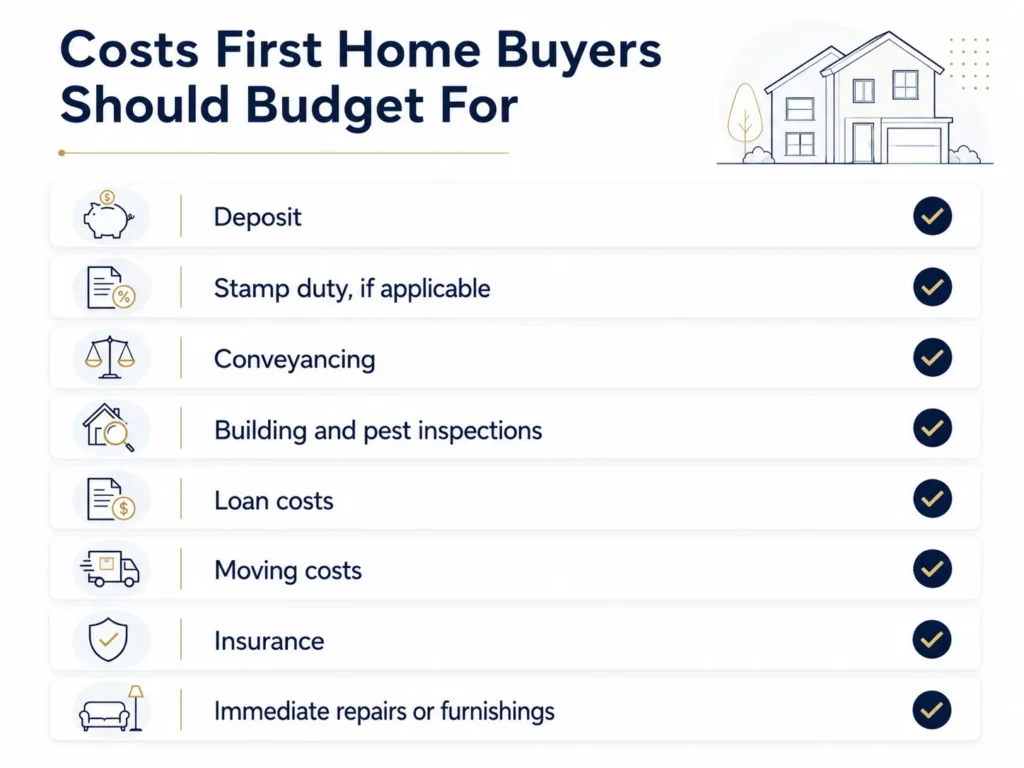
First home buyers also need to allow for stamp duty if applicable, conveyancing, pest and building inspections, strata reports, loan costs, moving costs, insurance and any immediate repairs or furnishings.
Some buyers may be eligible for a first home buyers grant (often referred to as first home buyer grants), stamp duty concessions, or a first home buyers scheme (also called a first home buyer scheme). These can help, but eligibility rules change and should be checked before relying on them.
What Is Pre-Approval?
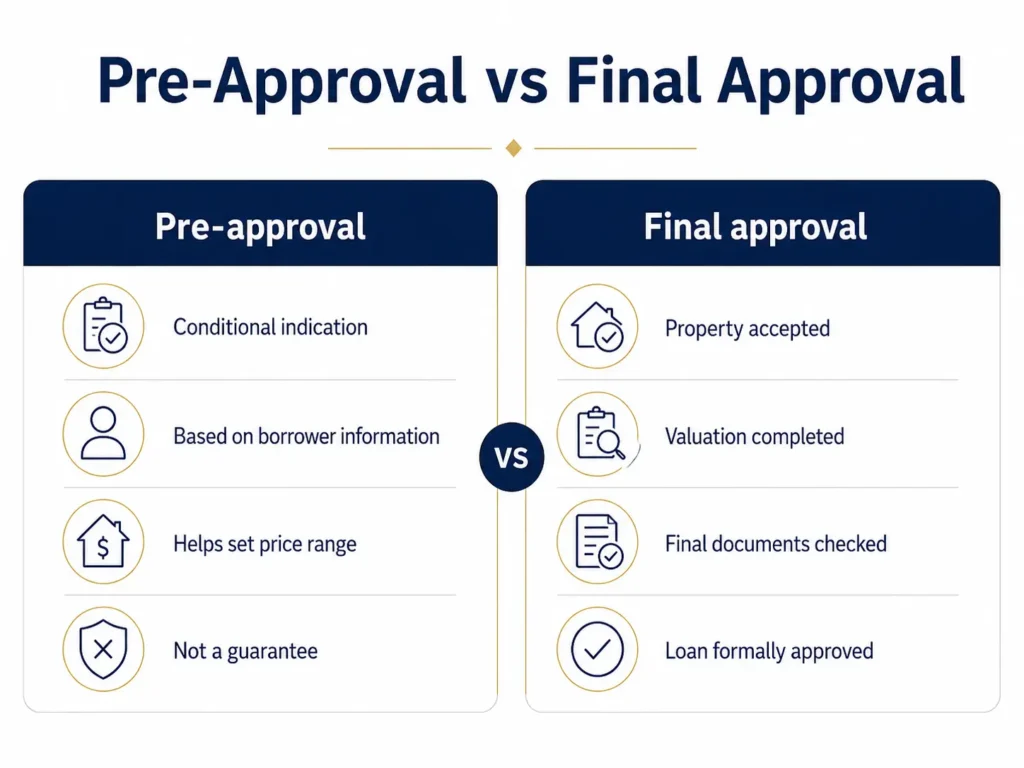
Home loan pre-approval is a conditional indication from a lender that you may be able to borrow a certain amount.
It can help you understand your price range and make more confident offers. However, it is not a final approval. The property, valuation and final documents still need to be accepted by the lender.
A strong home loan pre-approval should be based on accurate information and supporting documents, not rough estimates.
Choosing the Right Loan
When choosing the right home loan, first home buyers are often drawn to the lowest rate, but the right loan should also consider features, flexibility and future plans.
Offset accounts, redraw, fixed rates, variable rates, split loans and repayment structures can all affect how the loan works after settlement.
A simple loan may be suitable for some buyers. Others may need more flexibility if they plan to renovate, start a family, change jobs, invest or upgrade later.
Lender’s Mortgage Insurance
If you borrow above a certain percentage of the property value, lender’s mortgage insurance may apply. This protects the lender, not the borrower, but the borrower usually pays the cost.
LMI can help buyers enter the market sooner with a smaller deposit, but it increases the total cost of buying.
Some professional borrowers or eligible scheme participants may have options to reduce or avoid LMI, depending on lender policy and government program availability.
Common First Home Buyer Mistakes
Common mistakes include underestimating purchase costs, making offers without finance clarity, relying on maximum borrowing capacity, ignoring ongoing living costs and taking on new debt before settlement.
Another mistake is buying at the top of the budget without allowing for rate changes, repairs or lifestyle costs.
The right purchase price is not always the maximum a lender will approve.
Buying at Auction
Auction purchases require extra care because contracts are usually unconditional. If you win at auction, you are generally committed to complete the purchase.
Before bidding, first home buyers should understand their finance position, contract terms, deposit requirements and the risks if valuation or approval does not proceed as expected.
Private treaty purchases may offer more room to include a finance clause, subject to negotiation.
What Lenders Assess
Lenders usually assess income, expenses, savings history, deposit source, employment, credit conduct, existing debts and the property being purchased.
If your deposit includes a gift, inheritance or family support, the lender may ask for evidence and a declaration.
If you have changed jobs recently, have variable income or rely on overtime or bonuses, lender selection can become more important.
How to Prepare
Create a simple home loan documents checklist and gather payslips, bank statements, identification, savings evidence, employment details and information about any debts or credit cards.
It also helps to understand your comfortable repayment level, not just your maximum borrowing capacity.
Conclusion
Buying your first home is easier when you understand the lending position before you fall in love with a property.
The right advice can help you assess borrowing capacity, deposit requirements, pre-approval, grants, schemes and lender fit before you buy.
At Evolve Lending & Finance, we help first home buyers move forward with clearer advice, better structure and a more confident path to purchase.
